
Simple Septic System Care Tips for Simcoe County Homeowners
Learn how to protect your septic system, property, groundwater, and nearby lakes with practical maintenance tips and expert guidance.
service one
Septic System Do's
These simple habits help support long-term septic system performance while reducing the likelihood of backups, drain field issues, and costly repairs.
• Know the location of your septic tank and leaching bed
• Keep an as-built system diagram for future reference
• Divert surface water away from the tank and leaching bed
• Pump your septic tank regularly every three to five years
• Repair leaking faucets, toilets, and plumbing fixtures promptly
• Conserve water whenever possible
• Clean washing machine lint filters regularly
• Keep access lids secure and accessible
• Maintain records of inspections, pumping, and service visits
service one
Septic System Don'ts
Avoiding these common mistakes can significantly reduce the risk of septic system failure and costly damage.
• Do not flush chemicals, paint, wipes, cigarette butts, or sanitary products
• Do not use a garbage disposal or garburator
• Do not plant trees or shrubs near septic components
• Do not dig without knowing where system components are located
• Do not drive or park vehicles over the tank or leaching bed
• Do not enter a septic tank under any circumstances
• Do not connect rain gutters or storm drains to the system
• Do not leave faucets running during cold weather
• Do not connect water softeners directly to the system
• Do not connect sump pumps to the septic system
service one
Preventative Septic System Maintenance
Daily habits directly affect septic system health. Conserving water reduces strain on the system and allows wastewater to be treated more effectively. Only human waste and toilet paper should be flushed. Homeowners should also take steps to protect the leaching bed from physical damage and excess water loading. Septic systems are often shared concerns within rural communities, and encouraging neighbours to follow best practices helps protect local groundwater, lakes, and rivers throughout Simcoe County.
service one
Why Septic Inspections and Pumping Matter
Routine septic inspections and pumping are essential for preventing system failure. Septic tanks should typically be inspected at least every 3 years and pumped every 3 to 5 years by a qualified professional. The ideal frequency depends on household size, water usage, tank capacity, and the overall condition of the system.
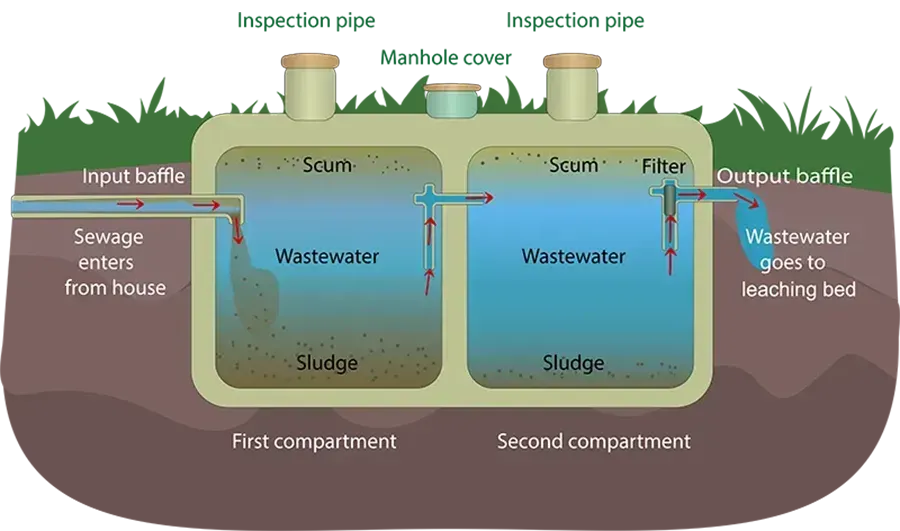
During an inspection, technicians evaluate the tank, baffles, filters, pumps, leaching bed performance, and signs of wear or failure. Pumping removes accumulated sludge and solids before they migrate into the drain field. When solids enter the leaching bed, they can clog pipes, restrict soil absorption, and potentially cause wastewater to surface or reach nearby water bodies.
service one
Practical Tips for Long-Term Septic System Care
• Use water efficiently by taking shorter showers and running full loads
• Schedule inspections every two to three years
• Pump septic tanks every three to five years
• Keep septic access points clear for maintenance
• Reduce phosphate-based detergent use
• Avoid building structures over septic components
• Install an effluent filter when appropriate
• Avoid snowmobile use over leaching beds
• Limit lawn watering near the drain field
• Direct roof runoff away from the septic system
service one
Protect Your Septic System Before Problems Start
Proper septic system care helps prevent failures, protect groundwater, and reduce the likelihood of costly repairs. If your septic system needs pumping, inspection, maintenance, or emergency service, Septic Pumping Plus + is here to help. We proudly serve homeowners throughout Barrie, Orillia, Midland, Wasaga Beach, Oro-Medonte, Springwater, Tiny, and surrounding Simcoe County communities.
Specialized Septic Solutions
Want to Know More About Your Septic System?
Explore these trusted educational resources to learn more about septic system operation, maintenance, inspections, and how to protect your property and the local environment.
Watersheds Canada Education Toolkit
A thorough explanation of septic systems and how they work.
Septic System Basics for Homeowners
This video explains how septic systems function and outlines maintenance best practices.
FOCA Cottage Country Septic System Guide
Learn about the major components of a standard septic system.
A Homeowner's Guide to a Healthy Sewage System
Practical maintenance tips for protecting your septic system.
Filter Installation
Comprehensive information about septic system operation and maintenance.
Buying a House With a Well and Septic System
Helpful information for homebuyers evaluating properties with septic systems.
Septic Smart – Understanding Your Home's Wastewater System
Learn how your septic system works and how to keep it functioning properly.
FOCA Cottage Septic Systems Fact Sheet
Common septic ownership mistakes and how to avoid them.
FAQ
Frequently Asked Questions
Will household cleaners damage my septic system?
Most household cleaners are safe when used in moderation. Excessive use of harsh chemicals may disrupt beneficial bacteria that help process waste.
What should I do if my septic tank is backing up into my house?
Stop using water immediately and contact a qualified septic professional. Continued water use may worsen the backup and increase property damage.
How often should septic pumping be done?
Most systems require pumping every three to five years, although frequency varies depending on tank size, water use, and household occupancy.
Do you replace septic tanks?
No. Septic Pumping Plus + focuses on repairs, maintenance, inspections, pumping, and rejuvenation services. We can recommend trusted replacement specialists when needed.
Can a failing tile bed be repaired instead of replaced?
In some cases, tile bed rejuvenation and restoration services may improve performance and extend system life, depending on overall site conditions.
Client Feedback
Hear From Homeowners Across Simcoe County
SPP+ is proud to serve local families, cottage owners, and property buyers with honest, expert septic care. Our commitment to clear communication and reliable service means our clients trust us with their most valuable assets. Your feedback helps us continue to set the standard for septic system maintenance in Barrie, Orillia, and beyond.